The Ultimate Guide to Yosemite for Couples: Where to Go, When to Go, and How to Actually Experience It
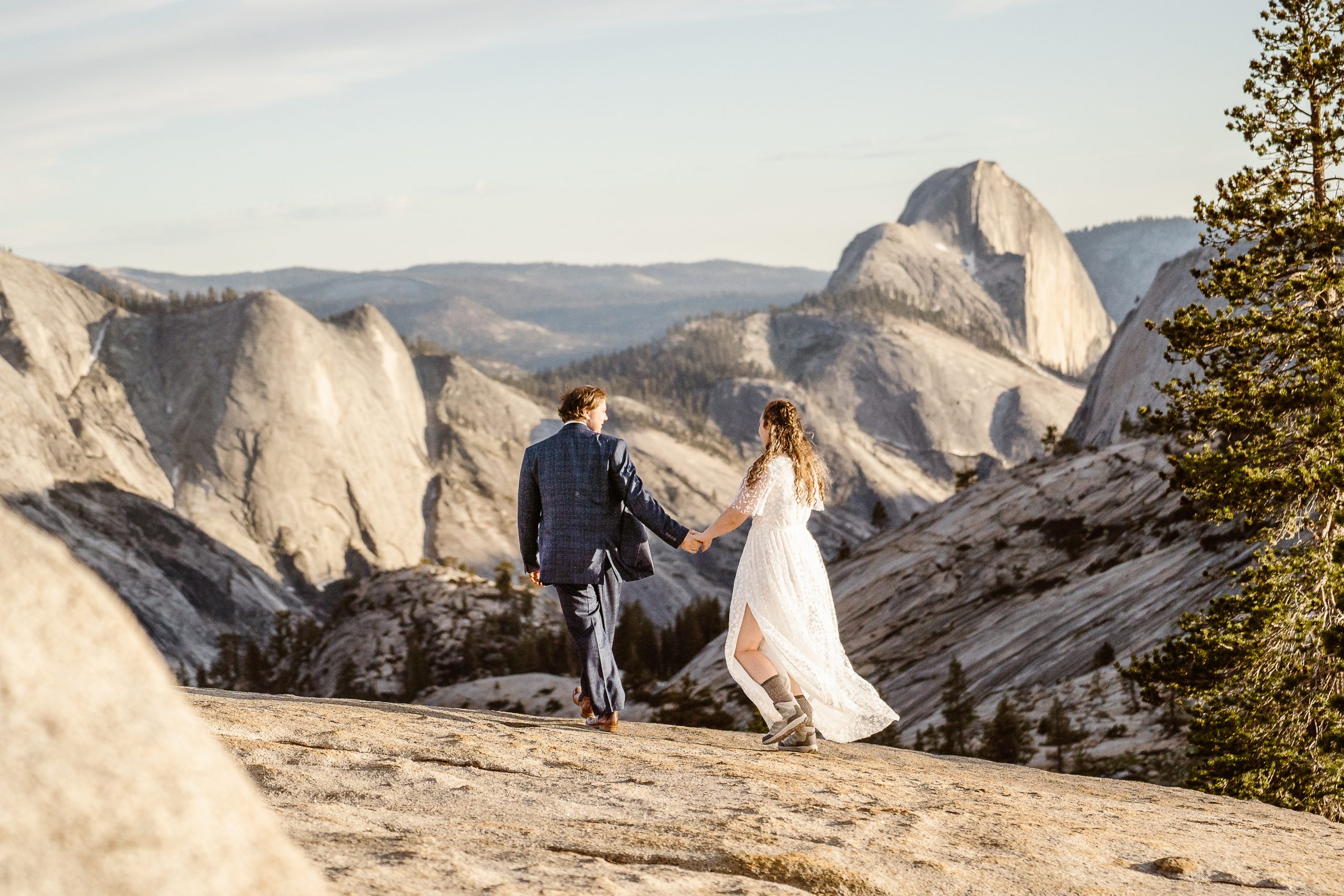


Yosemite for couples isn’t just another national park trip. It’s the kind of place that forces you to slow down, whether you planned to or not.
I’ve watched it happen over and over again. Couples come here thinking it’s just a bucket list stop, something to check off, and somewhere along the way it stops feeling like that. It gets quieter. Slower. More real. The kind of experience you don’t just move on from.
And when I’m with couples here, we’re not trying to manufacture anything. No stiff posing, no pretending. I’ll guide you when you need it, but mostly I’m paying attention to what’s already happening and helping you stay in it. Because the best moments out here aren’t the ones you plan, they’re the ones you almost miss if you’re trying too hard. If the idea of turning this into something more than just a trip is already in the back of your mind, yeah… that’s kind of my thing, and you can reach out here if you want to explore it.
I spent years living in and around Yosemite, coming back to the same places in different seasons, often with couples who didn’t want a scripted version of this place. This guide comes from that. Not just where to go, but how to experience Yosemite together in a way that actually means something when you look back on it
Table of Contents
Why Yosemite Is One of the Best Places for Couples
There are a lot of beautiful places in the world. Yosemite just hits different.
Yeah, the views are insane. You already know that. But it’s not just that. It’s everything around it. Sitting in traffic longer than you expected, then stepping out and seeing a deer just… standing there like it owns the place. Catching that last bit of light on Half Dome when it turns that soft alpenglow and suddenly nobody’s talking. Hearing about a bear sighting down the road and realizing, oh, this isn’t curated. This is real.
That’s why Yosemite for couples works so well. Not because it’s perfectly designed to be romantic, but because it isn’t. You’re not being entertained. You’re just in it together. Waiting, walking, noticing things you would’ve missed if you were rushing.
And somehow, those are the moments that stick. Not just the big viewpoints, but the in-between ones. The quiet pauses, the unexpected wildlife, the light shifting for a second longer than you planned to stay.
Best Time to Visit Yosemite for Couples
Every season in Yosemite offers something different. The best time depends on what kind of experience you want to have together.
Spring (March through May)
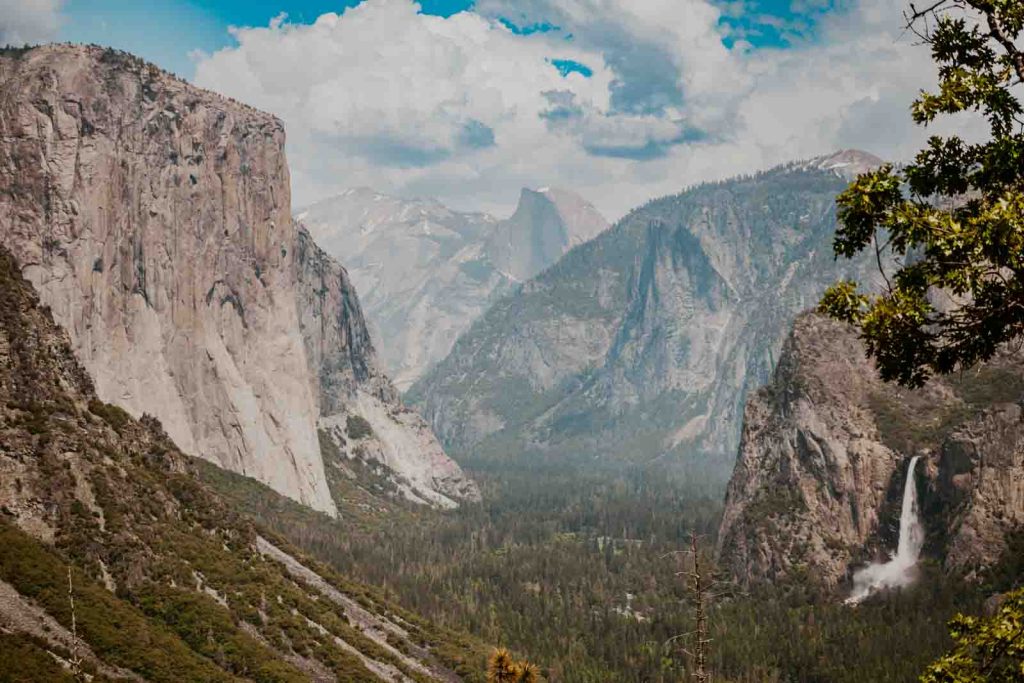
Spring is when Yosemite feels the most alive.
Waterfalls are loud, like you can hear them before you even see them, and the whole valley turns this deep green that doesn’t last very long. Everything feels like it’s moving. Water, clouds, weather, all of it shifting constantly.
And depending on when you go, not everything is open yet. Which honestly isn’t a bad thing. It spreads people out, forces you to slow down a bit, and makes the park feel less like a checklist and more like something you’re actually exploring.
If you want Yosemite to feel full, a little wild, and not overly polished, spring is one of the best times to be here.
Summer (June through August)
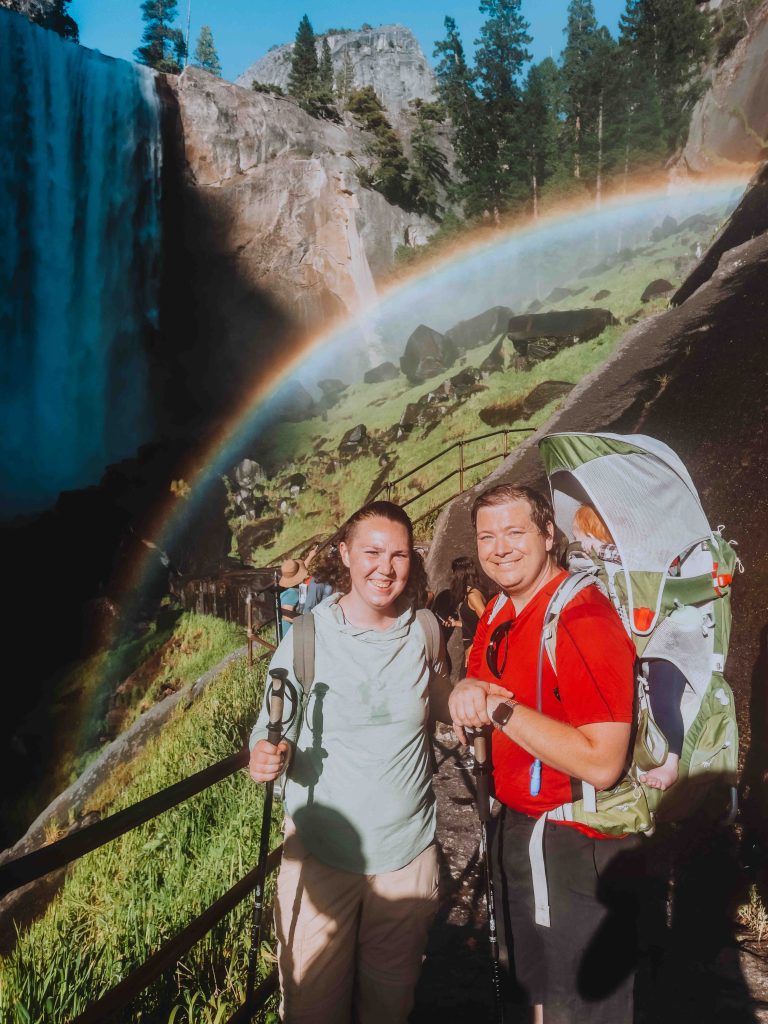
Summer opens everything up, and everyone shows up for it.
This is when Yosemite is fully accessible. Tioga Road, Tuolumne Meadows, high country lakes, all of it. It’s also when traffic backs up, parking fills before breakfast, and your perfectly planned timeline… doesn’t really matter.
You might plan for one location and end up doing it a completely different day at a better time. And honestly, that’s the move. Yosemite in summer works a lot better when you stay flexible instead of trying to force a schedule.
The key is knowing where to go when the valley gets chaotic.
Wawona, Hetch Hetchy, and Tuolumne Meadows are your reset buttons. Quieter, more spread out, and way less of that crowded, stop-and-go energy you’ll feel in Yosemite Valley midday. They give you space to actually breathe a bit and enjoy where you are instead of just navigating around people.
Early mornings and late evenings change everything here. The light is better, the air cools off, and the park starts to feel like itself again.
If you can work with the rhythm instead of against it, summer in Yosemite is still incredible. You just have to let go of the idea that you’re in control of the timeline.
Fall (September through November)
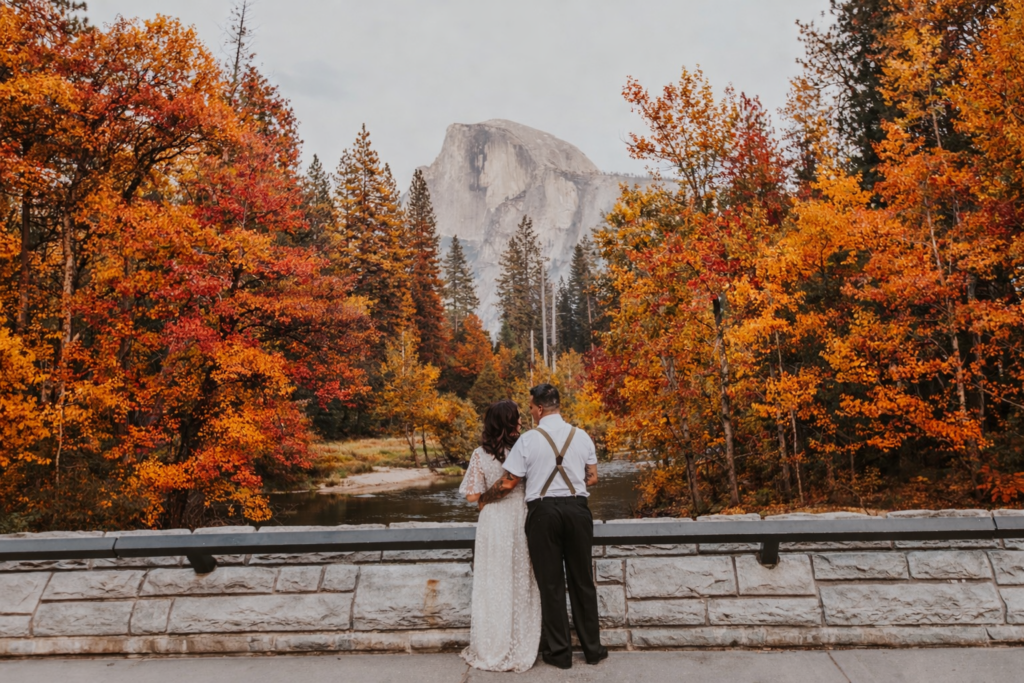
Fall is when Yosemite stops feeling like a theme park.
The crowds start to drop off, the pace slows, and you’re not constantly navigating around people just to see anything. You can actually pull over, take a minute, stay somewhere longer without feeling like you’re in the way.
But fall doesn’t show up all at once.
Early September still feels like summer. Honestly, even into early October, it can still be hot, especially in the valley. You don’t really start to feel that crisp, cooler air until mid to late October, when things finally shift and it starts to feel like a true seasonal change.
And when it does, the light changes with it. Warmer, softer, a little more golden. Mornings feel calm, evenings cool off faster, and everything starts to feel a bit more intentional instead of packed.
Waterfalls won’t be at their peak, and some areas may start to close depending on timing. But what you lose in volume, you gain in experience. It feels less like a high-energy destination and more like somewhere you can settle into.
If you want Yosemite for couples to feel slower, quieter, and a little more yours, fall is one of the best times to be here.
Winter (December through February)
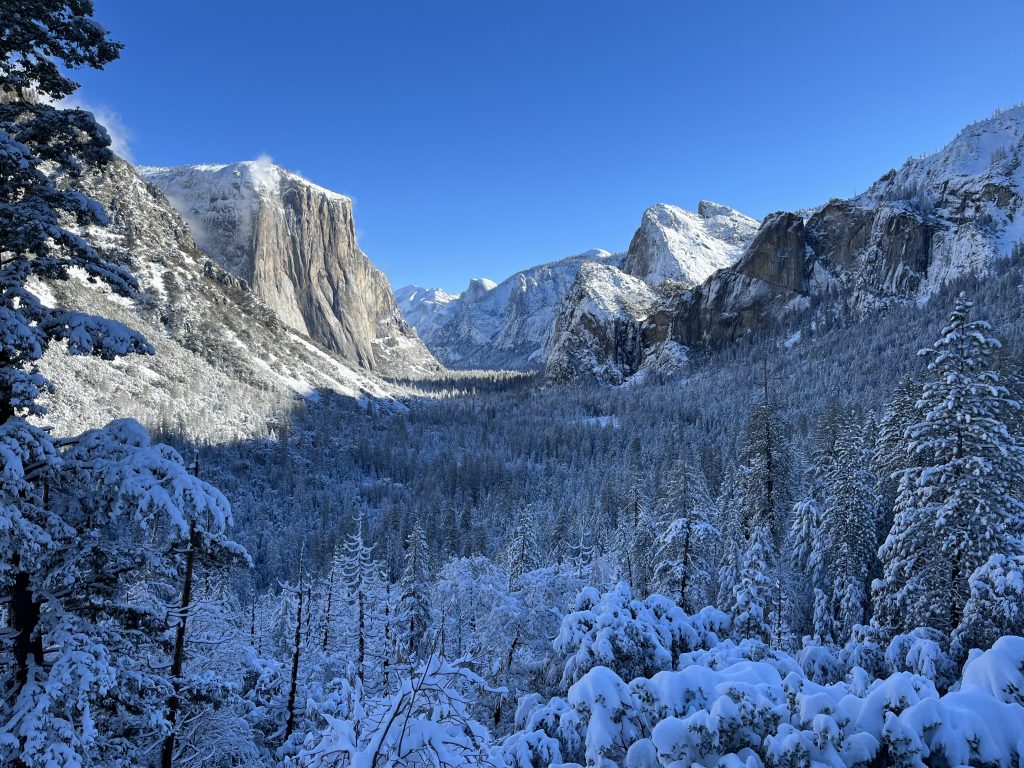
Winter is when Yosemite gets quiet in a way most people never experience.
Not empty, not closed, just… quiet.
A lot of people assume Yosemite shuts down in the winter, so they don’t even consider it. Which is exactly why it feels the way it does. Fewer people, less noise, more space to actually take it in without distraction.
And when it snows, everything changes.
The sound, the light, the pace. Walking through the valley with that crunch under your boots, seeing the granite covered in snow, catching a waterfall half frozen or starting to flow again depending on the day. It doesn’t feel dramatic, it feels still. Like the whole place just settled.
Not everything is accessible, and that’s part of it. Some hikes close because, yeah, you’re not hiking straight up a mountain in the snow. But what’s open is more than enough.
You’ve got Badger Pass for skiing and snow play, quiet trails through the valley, and viewpoints that feel completely different without the crowds. It becomes less about doing everything and more about just being there.
If you want Yosemite for couples to feel peaceful, slow, and almost untouched, winter is hard to beat. It’s easily one of the most underrated times to experience the park.
Best Things to Do in Yosemite for Couples
There are a handful of places everyone will tell you to go in Yosemite. They’re popular for a reason.
The difference isn’t whether you go. It’s how you experience them.
Tunnel View
Tunnel View is one of those places that actually lives up to the hype.
You come out of the tunnel and the entire valley opens up at once. El Capitan on one side, Bridalveil Fall on the other, Half Dome straight ahead. It hits every season.
Any time of day is worth it. Morning is usually quieter, softer light, more space to actually take it in without feeling rushed. Sunset looks incredible, but you’re almost definitely going to be shoulder to shoulder with other people trying to catch the same shot. And then there’s night, when everyone clears out, the stars come out, and it finally feels still again. Honestly, that’s when it feels the most like your own experience instead of something you’re sharing with a crowd.
If you want something a little more relaxed, the valley floor tour is an underrated option. You get the same iconic views, but without dealing with parking or traffic, and it gives you space to actually sit back and experience it instead of navigating the chaos the whole time. You can learn more about the tour HERE.
Mist Trail
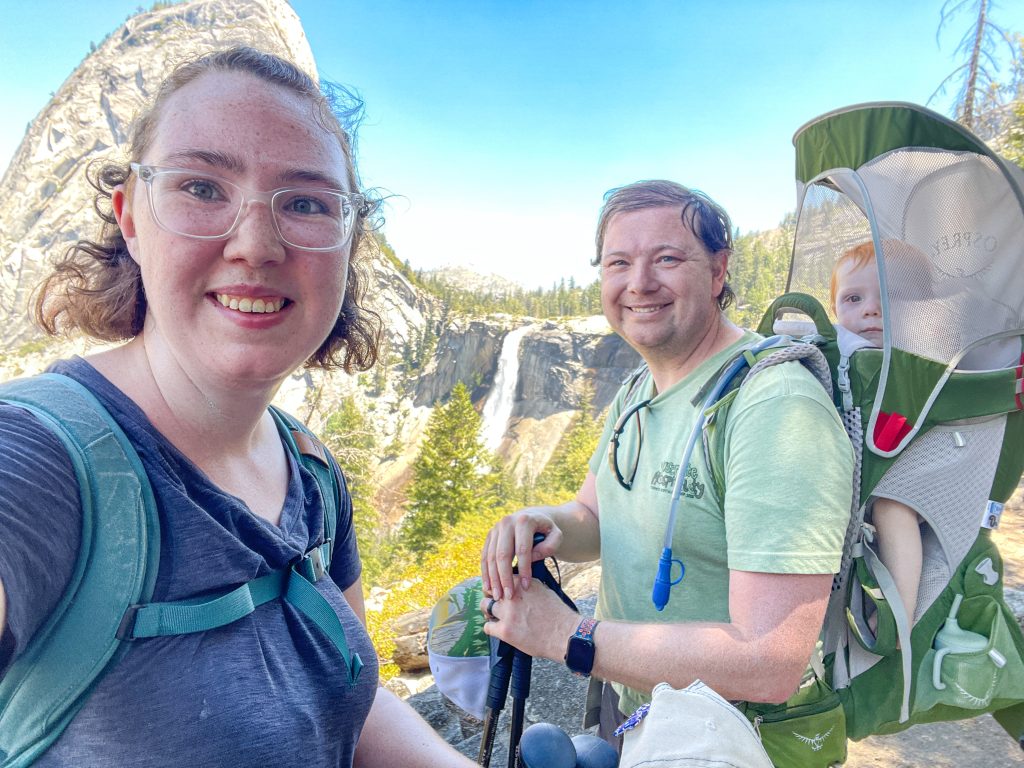
This is one of the most well-known hikes in Yosemite, and it earns it.
You follow the Merced River up to Vernal Falls, and if you keep going, Nevada Falls, or even all the way to Half Dome if you’re up for it. And depending on the time of year, you’ll feel the waterfall before you even see it. The mist hits first, the sound builds, and suddenly you’re not just looking at it, you’re in it.
There are over 600 granite steps on this trail, and yeah, you’re going to feel every. single. one. You’ll be wet, a little out of breath, probably questioning your life choices halfway up. It kind of sucks in the moment, and somehow that’s exactly why you end up loving it. And then there are the rainbows cutting through the mist, water everywhere, and you stop trying to stay dry or look put together. You’re just there, in it together, and that’s the part that sticks.
If you want a full breakdown of what it’s actually like and how to plan it, I wrote a full guide to the Mist Trail here.
Glacier Point
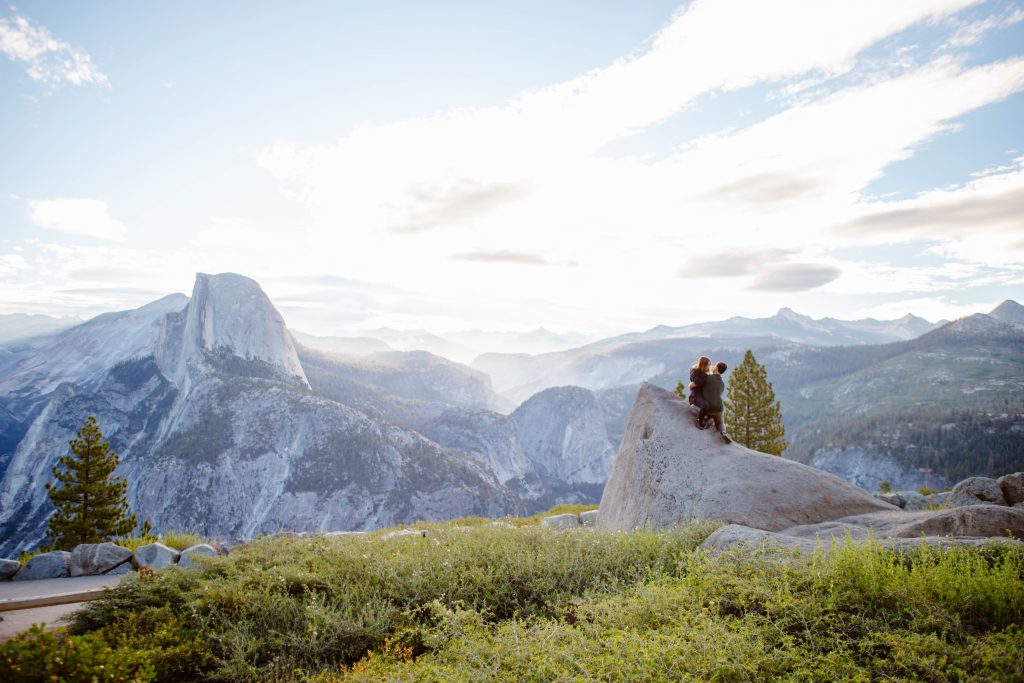
If there’s one place that makes people stop talking for a second, it’s Glacier Point.
You’re looking out over the entire valley, with Half Dome right in front of you and waterfalls below. It’s one of the few places where you can really see how everything fits together. If you time it right, this is one of the best places to catch alpenglow on Half Dome. That soft, warm light hits the granite right before sunset and everything goes quiet for a minute. People stop moving, stop talking, like everyone collectively realizes they don’t want to miss it.
It’s also one of the most incredible places for proposals or elopements. There’s something about the scale of it that makes those moments feel even bigger, without needing anything extra added to it.
Here are some galleries for inspiration:
A Note, Because It Would Be Weird Not to Say It
If you’re reading this and thinking, this feels like something we’d actually want to remember well, not just on our phones, I get that.
This is a place I come back to often with couples who want something a little more intentional than a typical trip. If that’s you, you can reach out here and we can start planning something that fits what you’re already feeling.
Tuolumne Meadows
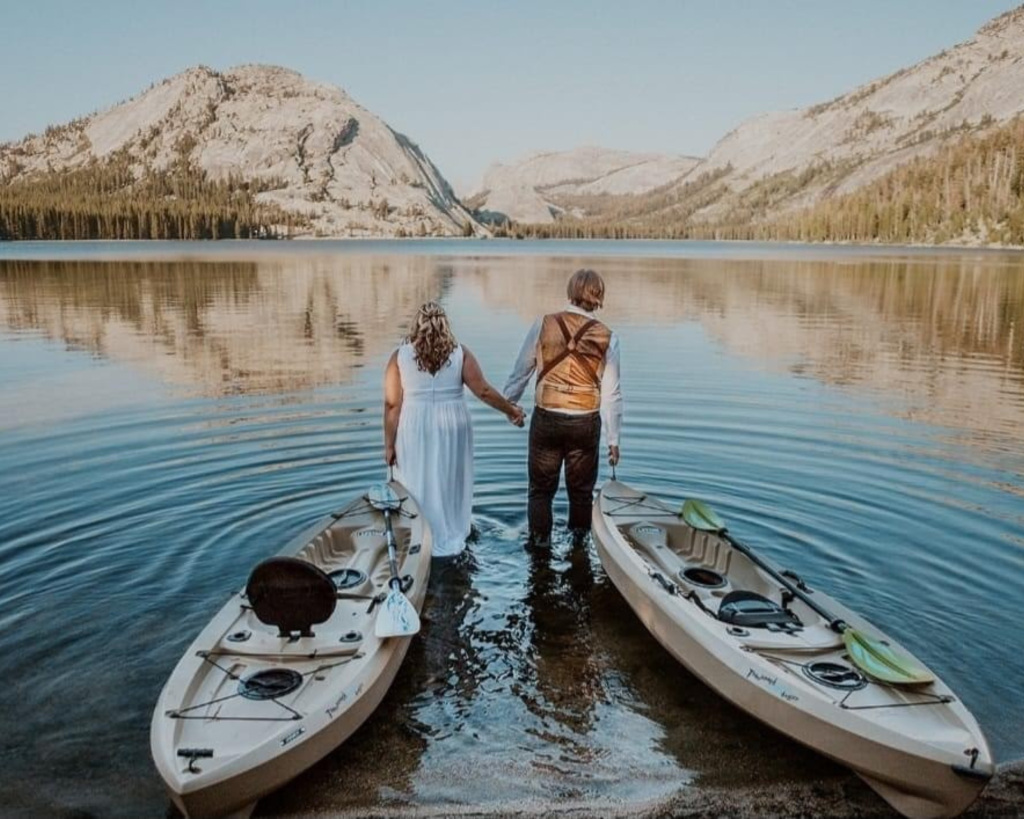
Tuolumne isn’t just quieter Yosemite. It’s a completely different experience.
You leave the valley and everything opens up. Wide meadows, granite domes everywhere, exposed rock, bigger sky. You’re not tucked between cliffs anymore, you’re out in it. It feels wilder, less contained.
It’s also where Yosemite starts blending into the backcountry. The Pacific Crest Trail runs through here. The John Muir Trail. You’re surrounded by people heading out on multi-day trips, which shifts the whole energy. It feels less like a destination and more like a starting point for something bigger.
And it’s cooler up here. Literally. Higher elevation, more wind, more exposure. You’ll feel it, especially if you’ve been in the valley all day. But that’s part of what makes it so good.
Then you’ve got Tenaya Lake, which honestly feels like it shouldn’t even be real. Clear water, granite all around it, space to just hang out without feeling crowded. It’s one of the best spots in Yosemite for swimming, kayaking, or just slowing down for a while.
This is also where couples tend to do things a little differently. Less structured, more intentional. I’ve seen kayaking elopements out here that felt so simple and so real, just the two of them out on the water with nothing else going on.
If the valley feels like Yosemite’s highlight reel, Tuolumne feels like the part most people miss. And it’s usually the part that ends up meaning more.
Mariposa Grove
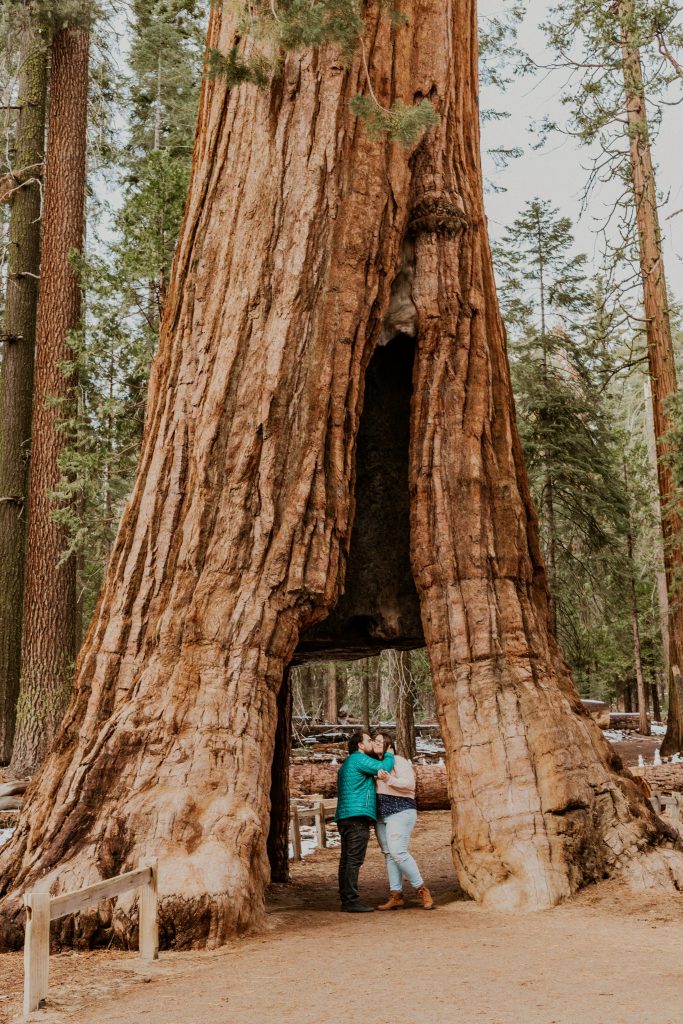
Mariposa Grove is a completely different kind of experience.
You’re walking through giant sequoias that have been there for thousands of years, and it does something to you whether you expect it to or not. It’s quieter in a different way. Less dramatic, more grounding.
The trails are slower, more shaded, and it naturally pulls you into a different pace. You’re not chasing views here. You’re just walking, looking up, and realizing how small you are in the best way.
It’s also one of those places that feels really good for couples who want something a little more calm and connected instead of high energy. Less adrenaline, more presence.
I’ve photographed couples here, and it always ends up feeling really simple and really real. If you want to see what that actually looks like, you can check out this Mariposa Grove session here.
Hetch Hetchy
Hetch Hetchy feels like a different side of Yosemite, but it’s not some hidden, empty secret.
It can get crowded, especially later in the day, and parking fills up faster than people expect. If you want it quieter, go earlier or later. That’s the difference between “this is nice” and “this is actually really good.”
It’s also a lot more limited than the rest of the park unless you’re backpacking. There’s basically one main hike out here if you’re just visiting for the day, heading out toward Wapama Falls. And honestly, that’s what most people are here for.
But that doesn’t make it a bad stop. The walk along the reservoir is still beautiful, the views open up in a different way than the valley, and it gives you space to just walk side by side without constantly navigating around people.
You can’t swim here, and there’s a whole history behind that, but even without it, it’s still worth the visit for the shift in pace alone.
If you’re looking for a solid day trip with a good payoff and a slightly different feel from Yosemite Valley, Hetch Hetchy does exactly that.
Romantic Things to Do in Yosemite That Most People Miss
Some of the best moments here aren’t the obvious ones.
In winter, grab hot cocoa and walk over to Lower Yosemite Falls. It’s simple, easy, and somehow ends up being one of those moments that sticks more than the bigger, more planned ones.
Cook’s Meadow at sunset. Mirror Lake when it’s full. Sitting somewhere a little longer than you meant to because the light is changing and you don’t want to leave yet.
Stargazing anywhere you can get a little distance from the valley lights. Yosemite is dark enough that the sky actually feels big again. The kind where you end up laying there longer than you expected, not really talking, just taking it in.
And stepping inside the Ahwahnee Hotel after being out in the cold all day. Warming up, slowing down, sitting somewhere that feels completely different from the rest of the park for a minute. It resets the pace in a way that’s hard to explain until you do it.
Yosemite isn’t really about stacking activities. It’s about noticing what’s already happening and letting it be enough.
Thinking About Eloping in Yosemite?
Honestly… it just makes sense.
You come here once and it’s kind of hard not to think about it. The views are unreal, the scale of everything is huge, and somehow it still feels quiet enough to actually have a moment that’s yours.
You’ve got granite cliffs, open meadows, alpine lakes, viewpoints that don’t need anything added to them. You don’t have to decorate it or make it “feel special.” It already is.
It’s the kind of place where saying your vows just fits. Like starting something big in a place that actually feels big.
And the best part is, it doesn’t have to be complicated. Yosemite works really well when you keep it simple and let the place do what it does.
I know this park like the back of my hand. The timing, the locations, how to avoid the chaos, where to go when plans need to shift, all of it. I help couples not just show up here, but actually experience it in a way that feels like them.
If you’re already thinking, yeah… we’d elope here, you can reach out here and we’ll start figuring out what that could look like.
Yosemite for Couples, in the End
Yosemite isn’t hard to enjoy. It’s hard to experience well.
Go early. Stay late. Be flexible. Let go of trying to see everything.
Because the best parts of this place aren’t the ones you plan. They’re the ones you almost miss if you’re rushing through it.
So don’t rush it.
Make it worth remembering.


