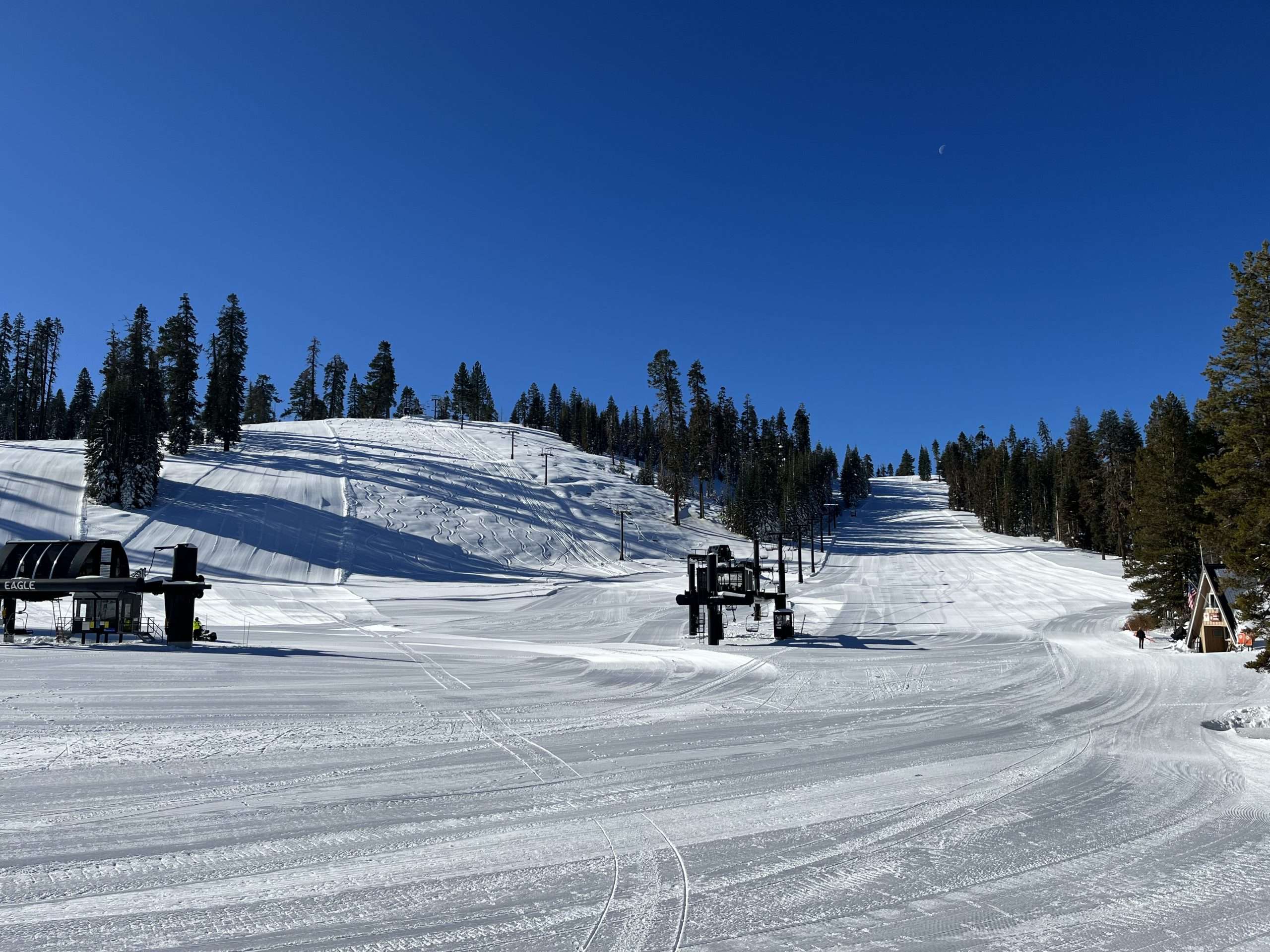


Badger Pass Ski Area is Yosemite National Park’s only downhill ski resort, offering beginner to intermediate terrain, cross-country skiing, snow tubing, and ski lessons just 45 minutes from Yosemite Valley. This guide covers where it’s located, what skiing at Badger Pass is actually like, and tips from someone who lived and worked here. I also learned to ski here.
TLDR: Badger Pass Ski Area
- Location: On the road to Glacier Point in Yosemite National Park
- Address: 7082 Glacier Point Rd, Yosemite National Park, CA 95389
- Activities: Alpine Skiing, snowboarding, cross-country skiing, snowshoeing, snow tubing
- Road Conditions: 209.372.1000 (Push 1 & then 1 again)
- Best for: Beginner and intermediate skiers, families
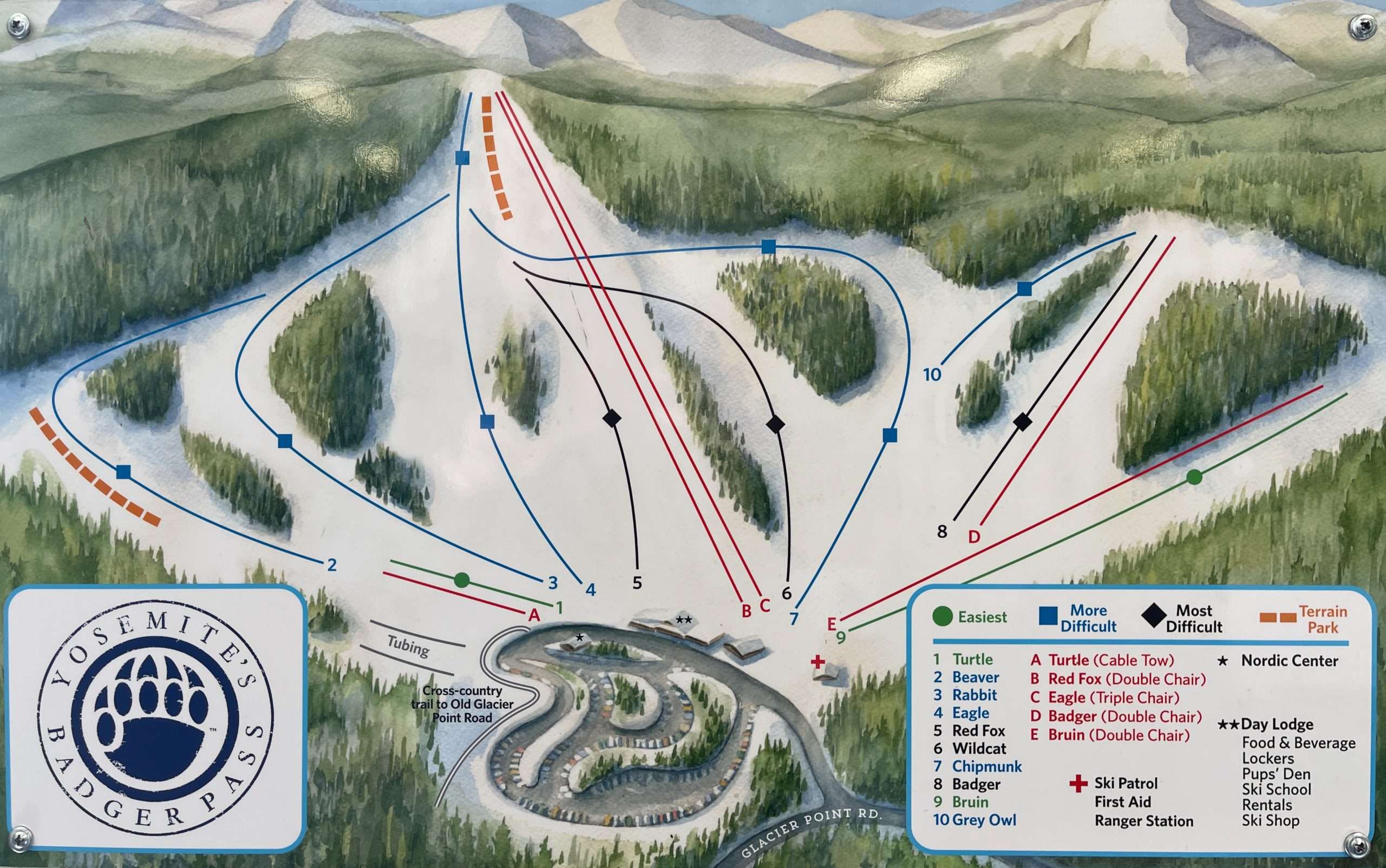
Badger Pass Ski Area Map

What to know before visiting Badger Pass Ski Area:
Operating Season & Snow Conditions
Badger Pass Ski Area is owned and operated by NPS. They have strict rules for operations such as all the snow at Badger Pass is all natural. They are not allowed to make snow. The normal operating season is December to April weather permitting.
Alpine Terrain and Lifts at Badger Pass
Badger Pass is not world-renowned for its terrain, and it’s not trying to be. What makes it cool is where it is. You’re skiing inside a national park, not a mega resort, and expectations matter here.
If you’ve never skied or snowboarded before, you’ll start on Turtle, the tow rope. It’s a very short, very forgiving beginner slope, and it’s where almost everyone starts. Once that feels comfortable, you’ll usually move on to Bruin, which is longer, steeper, and technically the only green run at Badger Pass.
From there, what you ski depends entirely on your comfort level. The rest of the mountain is mostly intermediate with a handful of expert runs mixed in. There is sometimes a terrain park, but it’s inconsistent and definitely not the main draw. If a park is a priority for you, this probably isn’t your mountain. If learning, cruising, and soaking in the setting are, it makes a lot more sense.
Trail breakdown:
- 1 learning area
- 1 beginner run
- 5 intermediate runs
- 3 expert runs
- 10 runs, 5 lifts, roughly 90 acres
Badger Pass shines when you treat it like a place to build skills and enjoy the experience, not chase variety or vertical. It’s where William and I learned to ski, long before I ever imagined I’d be teaching it.
Lessons & Rentals
Badger Pass Ski Area offers lessons for all ages and skill levels, for both skiing and snowboarding, from people who have never seen snow before to confident, experienced skiers. I had never touched skis when I learned here, which is part of why I’m so comfortable recommending their ski school.
They offer both group and private lessons for skiing and snowboarding. Lessons typically include a lift ticket and rentals if you need them, which makes it one of the easier places to get started without overthinking logistics. Lessons are especially well-suited for beginner and intermediate skiers, but advanced skiers can book more focused instruction as well.
Book lessons through the official Badger Pass Ski Area website
👉 Local Tip: Badger Pass isn’t usually very crowded, so group lessons often feel semi-private, and sometimes end up being private without the private lesson price tag.
Ski & Snowboarding Experience at Badger Pass Ski Area:
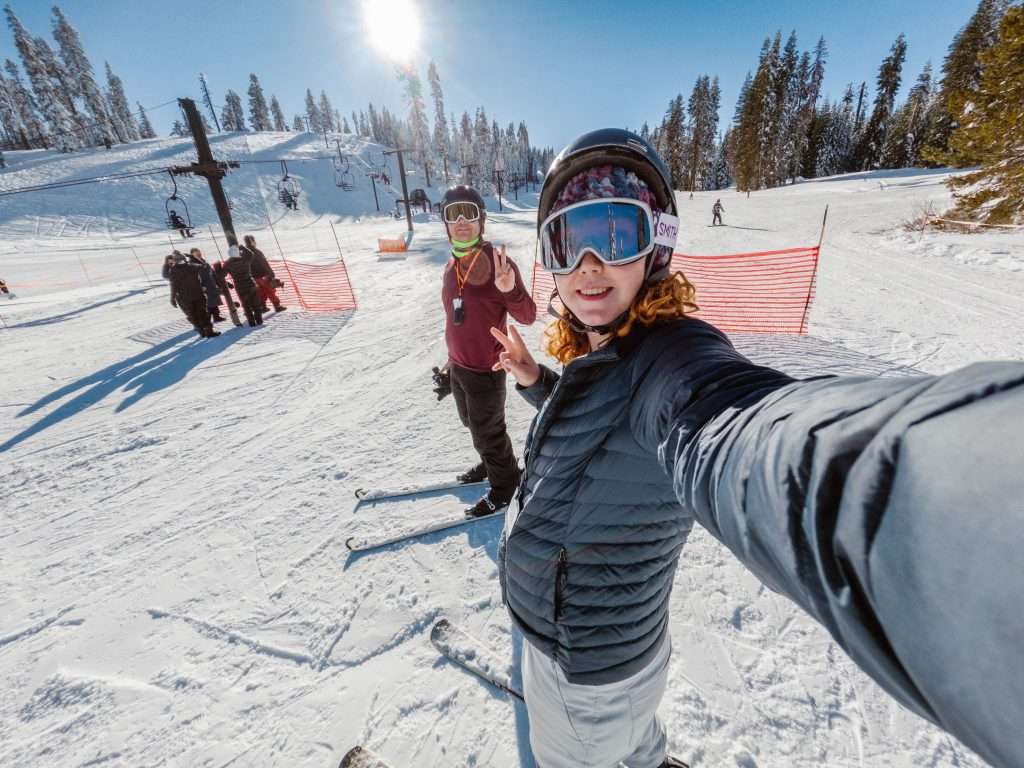
When William and I think of Badger Pass, it brings back memories of when we first learned to ski here. The instructors at the ski school were really helpful in teaching us and helping us appreciate skiing these slopes. We’re not expert skiers by any means, but we really enjoy the beginner and intermediate runs. They remind us of our progression from total beginners to being able to ski confidently.
Badger Pass has runs for all ability levels. There are 10 runs total, ranging from easy bunny slopes to tough mogul runs. The runs are accessed by 5 different chair lifts. So whether you’re just starting out or are an advanced skier, there are trails for you. The Eagle lift accesses some of the harder intermediate and advanced stuff. The Bruin lift services a nice beginner run. We usually stick to the easier and moderate runs for now. The black diamond expert trails seem crazy to us still! But who knows, maybe someday we’ll work our way up to those. For the time being though, we just look forward to relaxed weekend ski days on the easier Badger Pass slopes.
Cross Country Skiing & Snowshoeing Experience:

If you’re really into cross-country skiing, Badger Pass is a great place to spend hours exploring the groomed trails. With over 90 miles of trails winding through the area, you can ski all day and still have routes left to check out. The trails range from flat, meandering loops through the valley bottoms to more strenuous routes that climb up to scenic overlooks. It’s pretty peaceful – you’ll feel like you’ve got the snowy wilderness all to yourself at times.
For a classic Yosemite ski experience, set out on the 21-mile round-trip trail to Glacier Point. It’s a long one, but the views along the way are totally worth it. If you’re really looking to get off-the-beaten-path, you can even book overnight hut trips that take you into the less-visited northern areas beyond Badger Pass.
When you need a break from all the skiing, rent some snowshoes and just wander around through the quiet, snow-covered forests on the marked wilderness trails. With barely any other people around and the beautiful winter scenery surrounding you, it’s like being in your own private snow globe world. Peaceful doesn’t even begin to describe it.
Snow-Tubing Experience
Depending on the snow conditions, Badger Pass Ski Area may offer a snow tubing hill, providing thrilling entertainment for both kids and adults. Similar to a snow slide, snow tubing is a fantastic activity to unite families for a delightful afternoon of sliding down the hill. The tubing area at Badger Pass is perfect for children who are at least 42 inches tall. It’s important to note that their tubing hill is smaller compared to those at other resorts, making it ideal for groups with children. Additionally, unlike most resorts, the Badger Pass tubing hill does not feature a conveyor belt, so you will need to transport your tubes to the top of the hill by yourself. Luckily it’s not that long or steep of a walk.
Tips for a Memorable Visit to Badger Pass Ski Area
- Check weather conditions: Before heading out, check weather conditions. You will not get a refund if you purchase a ticket and don’t get to use it due to weather conditions.
- Dress in layers: Yosemite’s winter weather can be unpredictable, so dressing in layers allows you to adjust your clothing as needed throughout the day.
- Arrive early: Beat the crowds by arriving early in the morning, giving you more time to enjoy the slopes and activities before it gets busy.
- Stay hydrated: The combination of high altitude and physical activity can lead to dehydration, so be sure to drink plenty of water throughout the day.
- Pack sunscreen and sunglasses: Even in winter, the sun’s rays can be strong, especially when reflecting off the snow. Protect your skin and eyes by wearing sunscreen and sunglasses.
- Take breaks: Don’t forget to take breaks throughout the day to rest and recharge. Enjoy a hot beverage or snack at the lodge while soaking in the mountain views.
- Capture the moment: Bring a camera or smartphone to capture the breathtaking scenery and unforgettable moments during your visit to Badger Pass.
- Check road conditions: Before heading out, check road conditions and closures, especially if you’re traveling during or after a snowstorm, to ensure a smooth journey to and from Badger Pass.
- Bring your own food or budget for food. The lodge has a restaurant and bar with food and drink for purchase. It also has ample seating for you to eat your own food brought from home.
- Fill your car with gas: There is no gas in the valley. The closest gas station is in Wawona.
Frequently Asked Questions About Badger Pass Ski Area
Is Badger Pass good for beginners?
Yes! The terrain and location make it perfect for beginners of all ages.
How many lifts does Badger Pass Ski Area have?
5 lifts. 4 chair lifts and one tow rope
Is snowboarding allowed at Badger Pass?
Yes. Badger pass is snowboard friendly
Is there a lodge or food at Badger Pass?
Yes. At the lodge there is normal lodge food and a bar.
Nerdy Side Note:
If you’re the kind of person who likes knowing how places became what they are, here’s a little Badger Pass history, just for fun.
Badger Pass isn’t just another small ski hill tucked into the mountains. It’s the oldest ski area in California and the most established ski area ever operated inside the National Park Service. Today, there are only two national parks with lift-served alpine skiing inside the park boundaries. The only other one is in Olympic National Park in Washington. Olympic’s ski area is essentially a single hill with limited infrastructure and weekend-only operations, while Badger Pass is a fully built ski area with a lodge, multiple lifts, and regular winter operations.
Badger Pass has five lifts, a base lodge, rentals, lessons, and terrain spread across beginner, intermediate, and expert runs. When conditions allow, it operates seven days a week, which is almost unheard of for a ski area located inside a national park. That level of access and infrastructure is a direct result of how early Badger Pass was established.
The story starts over 100 years ago. In the 1920s, skiing began gaining traction in Yosemite, drawing winter travelers who saw the park as more than just a summer destination. During the Great Depression, the Civilian Conservation Corps played a major role in shaping Badger Pass into a true ski area. In 1935, it officially opened, with CCC crews building ski huts, lodges, and trails by hand. That early investment is why Badger Pass still feels like a complete, functioning ski area rather than a temporary winter add-on.
Over the decades, Badger Pass expanded and adapted to meet growing interest in winter recreation while staying relatively low-key compared to modern resorts. More recently, the ski area briefly operated under the name Yosemite Ski & Snowboard Area to reflect its broader range of winter sports. Locals and employees, though, have always just called it Badger Pass, and that name stuck for a reason.
For a ski area inside a national park, Badger Pass isn’t just rare. It’s foundational.
Badger Pass isn’t the kind of ski area you visit to rack up vertical or brag about conditions. It’s the kind of place where people take their first shaky turns, fall in love with snow, and slowly build confidence one run at a time. It’s where William and I learned to ski, and where that foundation eventually led us to teaching others how to do the same.
What makes Badger Pass special isn’t the size of the terrain or the number of lifts. It’s the setting, the history, and the feeling that skiing here is still about learning, presence, and being outdoors in a place that hasn’t been overrun by hype. You’re skiing inside a national park, surrounded by quiet forests and winter light that feels almost unreal on the right day.
If you’re looking for a low-pressure place to learn, to explore winter in Yosemite, or to experience skiing without the chaos of a major resort, Badger Pass delivers exactly that. It’s not trying to be anything else, and that’s why it works.
Take your time here. Dress warmly. Let the mountain teach you at its own pace. Some places don’t need to impress you. They just need to welcome you.
Related Blog Posts to Help Plan Your Yosemite Trip: